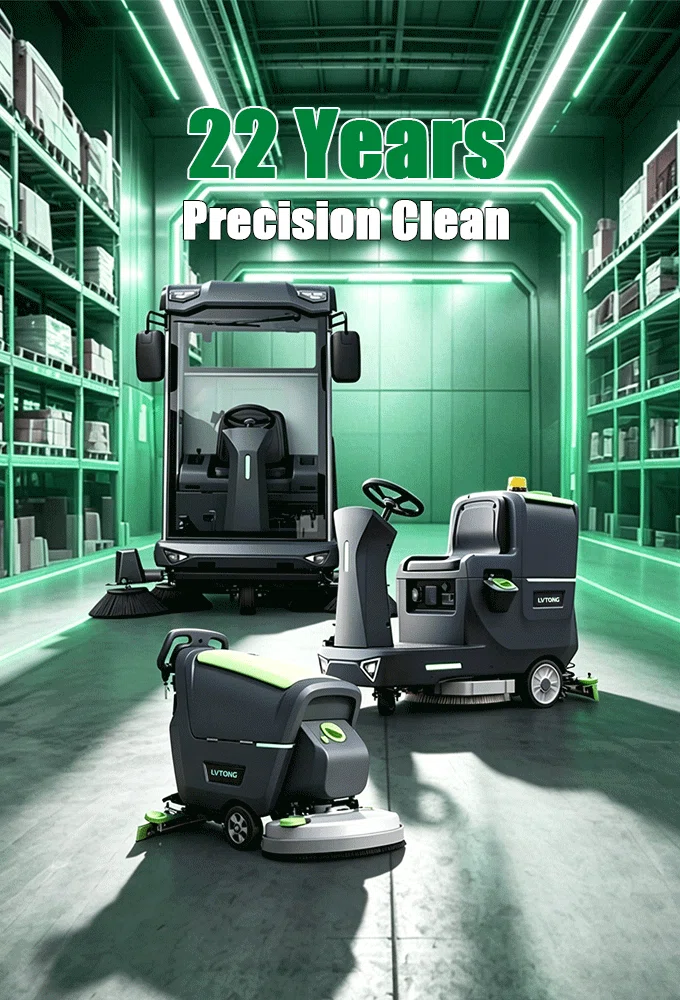
A reliable commercial cleaning machine manufacturer should be evaluated through production experience, machine performance, quality systems, customization ability, and after-sales support. Companies operating hotels, warehouses, airports, and industrial facilities often compare suppliers based on equipment lifespan, cleaning efficiency, maintenance frequency, and service response time. For example, a floor scrubber running 6–8 hours daily should maintain stable output for several years, while manufacturers with ISO 9001 systems, product testing procedures, and international service networks usually provide more consistent equipment quality.
Commercial cleaning equipment purchases involve long-term operating costs rather than only the initial machine price. A professional supplier should provide detailed information about motor capacity, battery cycle life, brush performance, water recovery rate, and spare parts availability. In 2024, many facility operators reported that equipment downtime and manual cleaning hours were major factors affecting annual maintenance budgets, making manufacturer selection an important part of facility management planning.
“A suitable manufacturer provides machines that match the working environment, cleaning frequency, floor type, and maintenance requirements of each customer.”
When comparing suppliers, manufacturing history should be reviewed first. Companies with more than 10 years of industry experience often have improved production processes, stronger component sourcing systems, and broader knowledge of different cleaning applications. A manufacturer producing 5,000 or more machines annually usually has more mature assembly procedures than a small-scale supplier with limited production records.
Experience also affects product development. A cleaning machine designed for a 30,000-square-meter warehouse requires different specifications from equipment used in a hospital or retail center. Industrial facilities may require stronger motors and larger tanks, while healthcare environments often require quieter operation and easier sanitation.
A detailed supplier review can include:
| Evaluation area | Information to check |
|---|---|
| Production history | Years in operation, annual output, factory capacity |
| Product range | Scrubbers, sweepers, vacuum systems, robotic machines |
| Engineering ability | Product upgrades, technical support, customization |
| Quality management | Testing procedures, certifications, inspection records |
The technical performance of equipment directly affects daily cleaning results. A commercial machine used in large facilities may cover thousands of square meters per hour, so small differences in efficiency can create significant differences over a year. For example, improving cleaning productivity by 15% can reduce required operating hours when machines are used every day.
Battery technology is another important factor. Modern electric cleaning machines commonly use lithium battery systems because they offer longer service periods and shorter charging times compared with older battery types. Some industrial models can operate for 4–8 hours on a single charge, depending on machine size, floor conditions, and cleaning settings.
The manufacturer should provide measurable specifications rather than general descriptions:
| Technical factor | Questions to ask |
|---|---|
| Cleaning width | How many square meters can the machine cover per hour? |
| Battery life | How many operating hours are available per charge? |
| Water system | What is the clean water and recovery tank capacity? |
| Motor system | What is the rated power and expected lifespan? |
Quality control procedures separate experienced suppliers from manufacturers focused only on assembly. A professional commercial cleaning machine manufacturer should have inspection procedures covering materials, electronic components, mechanical parts, and final machine performance.
For international customers, certifications and testing records are often required before purchasing. Common requirements include CE marking for European markets, electrical safety testing, and quality management certification. These standards help buyers understand whether products meet regional requirements.
A typical factory quality process may include:
-
Incoming inspection of motors, batteries, controllers, and structural parts
-
Assembly accuracy checks during production
-
Functional testing after machine completion
-
Safety inspection before shipment
-
Packaging checks for international transportation
Research and development capability is becoming more important as cleaning equipment becomes more intelligent. Between 2020 and 2025, many manufacturers introduced features such as automatic water control, digital monitoring systems, battery management technology, and autonomous navigation functions.
Large facilities increasingly require equipment that can integrate with operational management systems. Airports, logistics centers, and commercial buildings may need machines that provide usage records, maintenance reminders, and working status information.
“Manufacturers with internal engineering teams can usually respond faster when customers require product adjustments or new functions.”
Customization ability should also be reviewed before cooperation. Different industries have different cleaning conditions, including floor materials, working schedules, space limitations, and hygiene standards. A standard machine may not always provide the best result for every environment.
Examples of customization requirements include:
| Application | Possible customization |
|---|---|
| Warehouse | Larger battery capacity, wider cleaning path |
| Hospital | Lower noise, easier disinfection |
| Shopping center | Compact design, appearance requirements |
| Factory | Stronger structure, heavy-duty operation |
Project support is another area worth checking. Large customers often require several machines, operator training, maintenance schedules, and technical documents. Suppliers with project experience can provide clearer installation guidance and usage recommendations.
After-sales service affects the total ownership experience. Commercial cleaning machines are usually used frequently, and replacement parts or technical assistance may be needed during operation. A manufacturer that maintains spare parts inventory and provides quick technical responses can reduce unnecessary service interruptions.
Important service questions include:
| Service item | Evaluation point |
|---|---|
| Warranty period | Coverage length and included components |
| Spare parts | Availability and delivery time |
| Training | Operator guidance and maintenance instructions |
| Technical support | Response channels and service hours |
Operating cost should be calculated together with purchase price. A machine with a lower initial cost may require more repairs, consume more energy, or provide lower cleaning efficiency. A five-year ownership calculation should include equipment price, battery replacement, maintenance, labor savings, and expected service life.
For example, if one machine costs 20% more but increases cleaning capacity by 25% and reduces maintenance frequency, the higher purchase price may be balanced by lower operating expenses over several years.
Supplier reputation can be checked through customer references, industry exhibitions, distributor networks, and published application cases. Manufacturers serving airports, hotels, factories, and logistics facilities often have more practical experience because their equipment operates under demanding conditions.
A careful evaluation process should include:
-
Reviewing factory information and production capability
-
Comparing technical specifications from multiple suppliers
-
Checking certifications and testing documents
-
Understanding service policies
-
Calculating long-term operating costs
Selecting a commercial cleaning machine manufacturer requires reviewing both equipment quality and supplier capability. Businesses that compare production systems, machine performance, service support, and ownership costs can select partners that provide stable cleaning equipment for long-term commercial operations.