Mobile App vs Browser for Adult AI Chat
Both routes reach the same catalogue, but they are not the same habit. An installed app keeps a session alive in your pocket and can interrupt you; a browser tab exists only while it is open and inherits whatever privacy settings the device already has. On Android the choice widens again, because the platform ships an app for iOS and an APK download rather than a store listing.

Key takeaways
- Persistence is the real difference: an installed app stays signed in, a browser tab ends when you close it.
- The iOS app is listed as CrushMash; Android uses an APK download rather than a store listing, so installation is a manual step.
- On shared hardware the browser is easier to keep clean, while on a personal phone the app is faster to reopen.
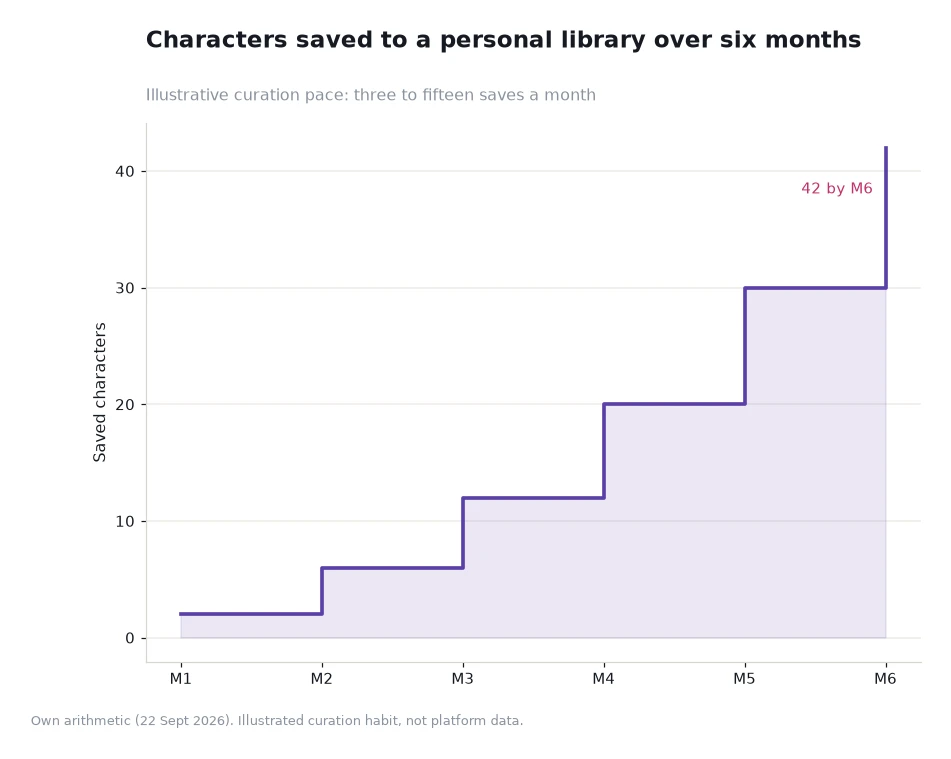
- At the illustrative curation pace a six-month library reaches 42 saves, roughly 29 of them from the phone and 13 from a desktop browser.
What actually differs between the two routes
Four differences explain almost everything else. The first is longevity: an installed app can sit in the background with a session ready, while a tab lives only while it is open. The second is interruption: an installed app can notify you, a tab cannot reach you once closed. The third is screen and keyboard, where a desktop browser wins comfortably because typing long messages on a phone keyboard is slower than typing them on a full-size one. The fourth is device sharing, which cuts the other way — a tab opened in a private window leaves no installed copy for anyone else to notice.
On iOS, Crushon's app is listed as CrushMash, and on Android it is offered as an APK download. Neither route is a Porn Chat AI feature as such; both are simply ways of reaching the same catalogue, and that file in a downloads folder is a file someone else might find.
When the installed route is the better habit
The app wins on frequency. Fewer taps between impulse and conversation means shorter, more regular sessions, which suits readers who use the platform in small gaps rather than in planned blocks. It also suits anyone whose phone is genuinely private, since a session that never has to be re-authenticated is a session that never gets abandoned halfway through typing a password.
The costs are equally clear. A permanent install is visible in an app list, it consumes storage, and if the phone is passed around for photos or a map, an installed app is one swipe away from the home screen. Anyone sharing a device regularly should weigh that before installing anything they would rather keep to themselves.
When the browser wins
The browser wins on control. Nothing is installed, a private window closes without leaving a session behind, and the address bar makes it obvious which site is open. On a shared laptop that combination is hard to beat, and it costs nothing except a login each time.
Screen size is the second browser advantage and the one people notice last. Long messages are easier to compose on a keyboard, and reading longer replies on a wide screen is more comfortable than scrolling on a narrow one. Readers who describe their sessions as feeling cramped are often describing a phone screen rather than the character.
A third browser advantage is update behaviour. A page reloads to the current version each time it is opened, while an app installed from an Android download stays at the version that was installed until you replace it by hand. That difference matters less for the interface than for the habits around it: a browser user never wonders whether their copy is current, and an app user has to remember that the manual step is theirs to make.
| Factor | Installed app | Browser tab |
|---|---|---|
| Session longevity | Stays signed in between visits | Ends when the tab closes |
| Reaching you | Can notify while running | Silent unless the tab is open |
| Typing comfort | Phone keyboard | Full-size keyboard on desktop |
| Shared hardware | Visible in the app list | Private window leaves no installed copy |
| Install route | CrushMash on iOS; APK download on Android | None |
| Library reach, six months | About 29 of 42 saves at a 70/30 device split | About 13 of 42 saves |
Worked example: where the saves actually happen
Illustrative assumption: a reader saves characters at a modest pace that grows as the catalogue becomes familiar. Month one ends at 2 saves, and additions of 4, 6, 8, 10 and 12 take the library to 6, 12, 20, 30 and finally 42 by month six. That is 42 saved characters in half a year, and the monthly additions sit inside a three-to-fifteen band.
Now split those 42 saves by device. Suppose 70% happen on the phone, where the app is one tap away, and 30% on a desktop browser. Then 42 × 0.7 = 29.4, so about 29 saves arrive through the app, and 42 × 0.3 = 12.6, so about 13 arrive through a browser. Six months of that split is 29 app sessions' worth of library growth against 13 browser ones, which is a strong argument for installing on the device you actually hold — and an equally strong argument for keeping a browser route for the hardware you share.
Choosing a route for porn ai chat sessions
The most common setup is a hybrid, and it is also the most sensible: install on the phone you keep with you, and use a browser on any machine that is not exclusively yours. That combination gets the app's speed where it matters and the browser's disposability where it matters, and neither half demands a policy that is hard to remember.
Whichever route you pick, the account work stays the same. A private and secure environment is the platform's own description of its side of the arrangement, and it is worth quoting it exactly rather than expanding it. The parts you control are the passcode on the device and the decision about what stays installed. Readers comparing apps in general, rather than this pair of routes, will find feature explanations on the AI chat blog, and a tag search works identically in both.
Frequently asked questions
Is the app faster than the browser?
It is faster to reopen, because it stays signed in and sits one tap from the home screen. Once a conversation is open the speed difference is small; the gap is mostly in starting a session, not in running one.
Which is more discreet?
It depends on the device. On hardware you share, a browser private window leaves nothing installed; on a phone that only you unlock, an installed app is convenient rather than exposed. The device passcode matters more than either choice.
Why is Android offered as an APK download?
That is how the platform distributes it, alongside CrushMash on iOS. The practical consequence is a manual installation and a manual update, so keep the file somewhere you control or delete it once installed.
Decide by device, not by preference
Match the route to the hardware rather than to taste. Install where the device is yours alone, browse where it is shared, and expect the phone to carry most of the library growth either way. Then leave the decision alone for a few months — the split between app and browser saves is a slow-moving number, and it is only worth revisiting if the device itself changes.
Data and sources: the platform's AI porn chat page for its own privacy wording[1], the app listing and APK distribution details noted on the site, and the blog and search pages, read 22 Sept 2026. The six-month library progression and the 70/30 device split are illustrative, not platform data. This content addresses adults aged 18 and over exclusively.