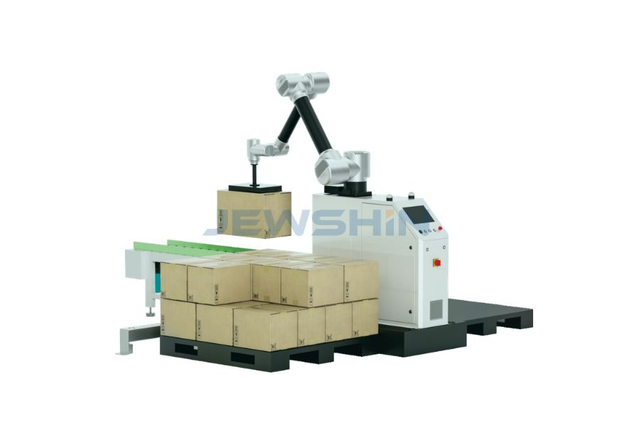
A high-quality automatic packaging machine should be judged by sustained output, dosing accuracy, seal consistency, uptime, changeover time, material use, sanitation, controls, safety, and service access rather than maximum advertised speed. A line running 100 packs per minute for an 8-hour shift has a theoretical capacity of 48,000 packs, yet 5% downtime removes 2,400 production opportunities. A 1% reject rate adds another 480 affected packs. Buyers should compare performance with their actual product and packaging material, verify results through a Factory Acceptance Test (FAT), and examine lifecycle costs over 5–10 years. Repeatable production under normal factory conditions matters more than peak speed during a short demonstration.
Rated speed is still a useful starting point, but it needs operating context. A machine advertised at 120 packs per minute theoretically produces 57,600 packs in an 8-hour shift; at 85% availability, available output falls to 48,960 before rejects, changeovers, or upstream interruptions are counted. Product flow, bag dimensions, film friction, sealing time, and filling technology can all reduce sustained speed.
That is why a supplier should state both maximum mechanical speed and expected continuous speed with the intended product. During a 2–4 hour FAT, buyers can record completed packages every 15 or 30 minutes rather than accepting a short demonstration at peak settings. A machine maintaining 95 packs per minute for three hours provides more useful production information than one briefly reaching 120.
A useful FAT records good packages produced, rejected packages, unplanned stops, stop duration, filling deviation, and seal failures. A sample of 10 packages is rarely enough to describe a long production run; collecting 100 or more packages across several time points gives the engineering team a better view of repeatability.
Once sustainable output is established, filling accuracy becomes easier to evaluate financially. Suppose a 500 g product is unintentionally overfilled by 2 g. At 40,000 packages per day, the plant gives away 80 kg daily. Across 250 production days, that becomes 20,000 kg of product, so small dosing differences deserve the same attention as machine speed.
Filling technology should match the product rather than a supplier's standard configuration. Multihead weighers are commonly used for snacks and irregular pieces, auger systems for many powders, piston fillers for suitable liquids and pastes, and counting systems for discrete items. Buyers should request accuracy data at minimum, normal, and maximum operating speeds because a ±1% result at low speed does not establish the same performance at full production.
| Measurement | Practical test |
|---|---|
| Filling accuracy | Weigh 100+ consecutive packs at several speeds |
| Repeatability | Compare samples from the start, middle, and end of a run |
| Reject rate | Record rejects as a percentage of total production |
| Giveaway | Calculate average excess fill × annual package volume |
| Recovery after stops | Check the first 10–20 packs after restart |
Accurate filling still produces an unacceptable package when sealing is inconsistent. Heat-sealing performance depends on temperature, pressure, dwell time, jaw condition, package contamination, and film structure. A temperature setting of 160°C on the HMI is not sufficient information; buyers should confirm whether the system maintains the specified process range during long runs and repeated stops.
Seal testing should therefore use the intended packaging material. If 500 packages are inspected and five have unacceptable seals, the observed defect level is 1%; at 50,000 packs per day, the same rate would correspond to 500 affected packages. Testing should include packages produced after startup, after a planned stop, and near maximum operating speed because thermal conditions can differ across those situations.
Packaging material control becomes more important when several film structures are used on one line. Printed flexible packaging requires stable film tension and registration so artwork, date codes, tear notches, and cut positions remain aligned. A registration error of only 2–3 mm can be commercially unacceptable when the package design has narrow print margins.
Material efficiency should be measured alongside registration. A line using 10 tonnes of packaging film annually with 4% process waste consumes about 400 kg in waste; reducing the rate to 2% lowers that amount to roughly 200 kg. Film waste, product giveaway, and rejects should be included in machine economics rather than treated as minor operating losses.
Lower waste depends partly on mechanical consistency. Frames, shafts, bearings, sealing assemblies, conveyors, pneumatic components, wiring, sensors, and fasteners need to tolerate repeated cycling over thousands of operating hours. Stainless-steel exterior panels alone do not establish build quality, so inspection should include areas behind guards and inside electrical cabinets.
Buyers can inspect cable labeling, terminal organization, weld quality, accessibility of bearings, guarding, lubrication points, and component identification. If a machine runs two 8-hour shifts for 250 days per year, it accumulates about 4,000 scheduled hours annually and roughly 20,000 hours over five years. Components that are difficult to reach can turn routine maintenance into significant lost production time.
Maintenance access leads naturally to changeover design because operators frequently interact with the same machine areas. A factory making four package formats may perform two or more format changes per day. Two 40-minute changeovers consume 80 minutes; reducing each to 20 minutes returns 40 minutes to the production schedule, equal to about 167 hours across 250 working days.
Useful arrangements include tool-free guides, quick-release contact parts, clearly marked adjustment points, stored recipes, removable forming sets, and servo-positioned adjustments where appropriate. A good test is to ask a trained operator—not the supplier's most experienced technician—to change from format A to B and then return to A while timing both procedures.
Repeatability matters as much as speed. If the second setup requires another 20 minutes of trial packs and manual adjustments, the advertised 15-minute mechanical changeover does not represent the full production interruption.
Controls can reduce that setup work. Modern PLC/HMI systems commonly store recipes for film length, temperature, filling parameters, conveyor timing, and servo positions. A plant running 20 SKUs benefits when approved parameters can be recalled instead of manually entered during every product change, particularly when several operators share the line.
The HMI should also make faults understandable. During FAT, buyers can deliberately create several safe fault conditions—such as opening an interlocked guard or interrupting material feeding—and check whether the screen identifies the affected area. Reviewing 20–30 representative alarms is more informative than confirming that an alarm page exists.
Controls also affect integration with end-of-line packaging equipment, including case packing, carton sealing, labeling, conveying, palletizing, and related downstream processes. A packaging line should exchange stop, ready, fault, and product-flow signals so one machine does not continue feeding into equipment that has already stopped.
Line balance deserves numerical review before purchase. If the primary packer produces 100 packs per minute but downstream equipment reliably accepts only 90, the nominal 10% capacity difference can create accumulation or repeated stops unless suitable buffering is provided. Capacity specifications should therefore be compared across the complete line rather than one machine at a time.
Production data can help identify where those losses occur. Useful records include good-pack counts, rejects, stop frequency, stop duration, alarm history, recipe changes, and operating speed. For a scheduled 480-minute shift, 45 minutes of stops represents 9.4% of available time; knowing whether those minutes came from feeding, sealing, downstream stoppages, or operator adjustments makes maintenance work more specific.
Connectivity should be evaluated according to the factory's actual systems. Buyers may need Ethernet-based industrial communication, data export, MES connectivity, or remote service access, while another plant may only require local production reports. In 2026, cybersecurity also deserves procurement attention whenever a machine can be accessed remotely: account permissions, software updates, network separation, and remote-access procedures should be documented.
More automation does not remove sanitation requirements. Food, pharmaceutical, cosmetic, and other hygiene-sensitive applications need accessible product-contact surfaces, suitable materials, manageable disassembly, and cleaning procedures appropriate to the product. A machine requiring 60 minutes of cleaning after every product change can lose 250 hours annually if that cleaning occurs once per working day.
Cleaning trials can therefore be timed during acceptance testing. Operators should remove the parts normally cleaned, perform the specified procedure, inspect difficult areas, and reinstall everything. Buyers can record total minutes, number of tools required, number of removable components, and whether settings need readjustment afterward. A 25% reduction in routine cleaning time can materially increase available production hours over several years.
Safety should be assessed during the same access review. Automatic packers may contain heated sealing jaws, cutters, moving belts, rotating shafts, pneumatic actuators, and high-speed mechanisms. Guards, door interlocks, emergency stops, electrical protection, and safe maintenance access should meet the applicable requirements of the installation market, including relevant EU or North American machinery and electrical requirements.
Energy use belongs in the operating-cost comparison as well. Request typical electrical consumption rather than relying only on maximum connected load, and obtain compressed-air consumption where pneumatic systems are used. A 3 kW difference across 4,000 annual operating hours equals 12,000 kWh per year; over five years, the difference reaches 60,000 kWh before electricity-price changes are considered.
Operating costs become more informative when maintenance and spare parts are added. Buyers should request a recommended spare-parts list covering the first 12–24 months and identify items with long lead times. Sensors, heaters, belts, seals, cutters, bearings, pneumatic components, and other wear items may have modest individual prices while still causing hours of downtime when replacements are unavailable.
Supplier support therefore needs measurable terms. Ask about response hours, technician availability, remote support, warranty coverage, documentation, operator training, and typical spare-part lead times. If a line produces 6,000 saleable packs per hour, a 10-hour stoppage represents 60,000 packages of unavailable capacity, making service response part of the equipment's financial performance.
Purchase price can then be compared with lifecycle expenditure. Consider Machine A priced $25,000 below Machine B but producing $400 more monthly material waste, $500 more maintenance expense, and $600 more downtime-related cost. The $1,500 monthly difference reaches $18,000 per year and $90,000 over five years, exceeding the initial saving by $65,000.
A final comparison should combine measured FAT results with 5–10 year ownership assumptions: sustainable packs per minute, filling deviation, seal reject percentage, changeover minutes, cleaning time, annual maintenance, energy consumption, material waste, spare-parts availability, and expected service response. A specification sheet provides nominal capacity; production samples, timed procedures, documented acceptance criteria, and lifecycle calculations show how the machine is likely to perform after installation.